For many people receiving long-term hemodialysis, an AV Fistula in Pokhran Road 2 serves as an important vascular access route. Protecting this access is an essential part of dialysis care because problems with blood flow, infection, clotting can interfere with treatment.
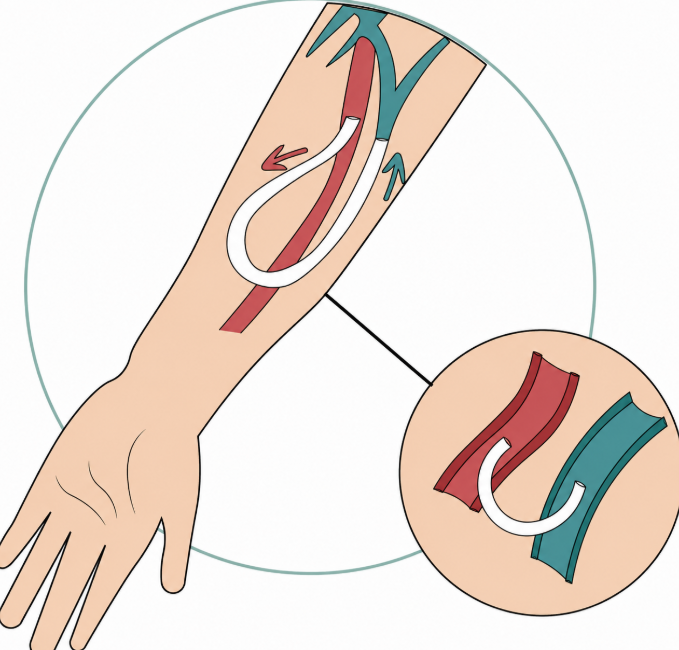
An arteriovenous fistula is created surgically by connecting an artery to a vein, usually in the arm.
Why AV Fistulas Are Used
A fistula allows the vein to become larger plus stronger over time so it can support repeated needle access during hemodialysis.
It generally needs time to mature before routine use.
The maturation period varies, so patients should follow the advice of their nephrology plus vascular access teams.
Learn the Normal Feel of Your Fistula
Patients are often taught to recognize the vibration over the fistula, commonly called a thrill.
Knowing what the access normally feels like makes it easier to notice a significant change.
A missing or markedly altered thrill can indicate reduced blood flow. This requires prompt medical attention rather than waiting until the next routine dialysis session.
Warning Signs Around the Access
Medical review may be needed if there is
- Increasing redness
- Unusual warmth
- Significant swelling
- Persistent pain
- Discharge
- Fever
- Prolonged bleeding after dialysis
- Sudden change in the thrill
- Difficulty during dialysis access
Changes in dialysis machine pressures or repeated cannulation difficulties may also prompt assessment by the dialysis team.
Protect the Fistula Arm
Patients should follow the access-care instructions provided by their treatment team.
Common precautions include avoiding unnecessary pressure over the fistula plus informing healthcare workers about the dialysis access before procedures involving that arm.
Blood pressure cuffs, blood draws, intravenous lines may need to be avoided in the fistula arm depending on clinical circumstances.
Patients should follow individualized medical advice.
Hygiene Matters
Keeping the access area clean is important.
Before dialysis, appropriate skin preparation helps reduce infection risk. Patients should avoid scratching scabs or applying unapproved creams over the access site.
Any signs of infection should be reported promptly.
What About Bleeding?
A small amount of bleeding after needle removal can occur. Appropriate pressure is usually applied according to dialysis-unit instructions.
Bleeding that does not stop, becomes unusually heavy, occurs spontaneously needs urgent medical attention.
Regular Monitoring Protects Access
Fistula problems can sometimes develop gradually.
Changes in blood flow, narrowing within the access, repeated dialysis difficulties may indicate that further evaluation is needed.
At Hope Kidney Care, patients in Pokhran Road 2 requiring dialysis-related nephrology support can receive guidance concerning AV fistula monitoring plus broader kidney care.
A functioning fistula should never be taken for granted. Patients who understand their usual access characteristics can play an active role in recognizing changes early.
If the thrill suddenly disappears, severe swelling develops, bleeding cannot be controlled, the access becomes markedly painful or infected, prompt medical assessment is appropriate. Early attention to access problems may help protect a route that plays a central role in ongoing hemodialysis treatment.
Keywords